
Article: How to Choose Wallpaper for a small room
How to Choose Wallpaper for a small room
(Without Making It Feel Smaller)
Can wallpaper actually make a small room look bigger?
Small rooms have long been treated with caution in interior design. White walls, minimal decoration, and the belief that wallpaper will only make a compact space feel more confined have shaped decorating advice for years. But in reality, wallpaper isn't the problem, choosing the wrong one is.

The best wallpaper for small rooms doesn't shrink a space; it changes how you perceive it. Instead of avoiding wallpaper, focus on choosing designs that complement a room's proportions, lighting, and purpose. With the right choice, even the smallest spaces can feel layered, inviting, and more spacious.
Here's how designers approach wallpaper in smaller interiors, and the principles worth following before you commit to a pattern.
1.Light Wins Choosing Tone Over Pattern

When trying to make a room feel larger, most people focus on pattern size, but colour has a greater impact. Light-reflective shades like soft neutrals, warm whites, muted greens, pale blues, dusty pinks, and gentle greys brighten the space and make walls feel less imposing. They allow furniture and architectural details to stand out while maintaining a calm, open feel.
That doesn't mean small rooms should always be white. Rich tones like deep olive, charcoal, forest green, or navy can create a cosy, cocooning feel, especially in bedrooms or reading nooks, when used intentionally.
The key is embracing the contrast within the wallpaper itself. Wallpaper with soft tonal variation and gentle transitions feels more spacious than bold, high-contrast designs. Prioritise how the wallpaper interacts with light before focusing on the pattern itself.
Designer's Tip: Choose wallpapers with a matte or softly textured finish rather than glossy surfaces, which can create uneven reflections and make imperfections more noticeable in compact spaces.
2.Small-Scale Patterns vs. Large Motifs
A common myth is that small rooms require tiny patterns. While they often work well, they're far from the only option.


Small-scale repeats create subtle texture, while delicate florals, fine botanicals, understated vines, and soft geometrics add interest without overwhelming the space.
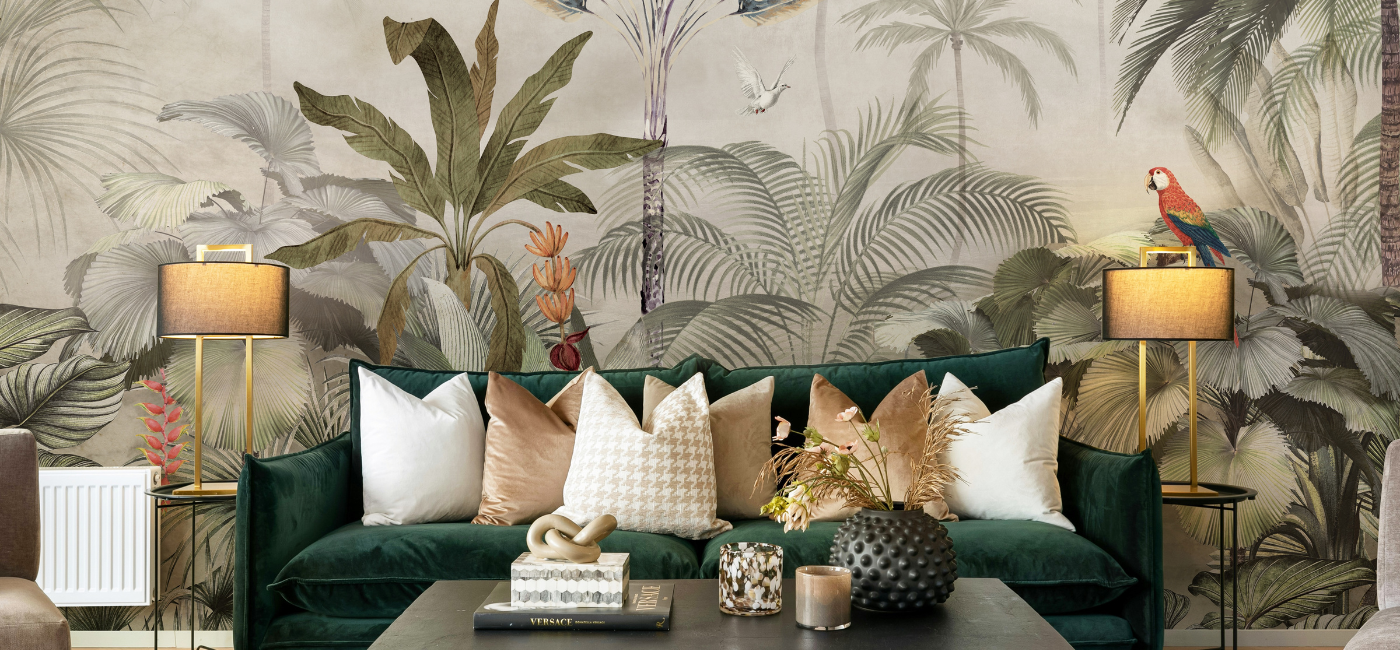
However sometimes larger motifs/scaled wallpaper can also make a room feel more spacious when the design includes plenty of breathing space. Oversized botanicals, elegant florals, or scenic murals with open backgrounds create depth without adding visual clutter.
The mistake isn't choosing a large pattern—it's choosing one that's densely packed.
Think it like this, a mural with a few large, beautifully illustrated trees and plenty of open space often feels more spacious than a wall covered in hundreds of tiny leaves.
As a general guide:
Let the room guide the scale. Compact spaces with plenty of architectural details on the wall tend to suit subtle repeating patterns
Small rooms with uninterrupted walls can comfortably carry oversized botanicals or scenic murals.
Whatever the scale, avoid overly busy designs with minimal negative space, as they can make a room feel visually crowded.
Designer's Tip: Step back at least 2–3 metres when viewing wallpaper samples. Pattern scale is meant to be experienced from a distance, not judged up close.
3.Vertical Elements = Height

Good wallpaper doesn't just decorate a room—it subtly changes how you experience its proportions.
If your primary goal is making a small room feel larger, vertical compositions generally provide the most effective visual lift. Patterns with strong vertical movement naturally encourage the eye to travel upward, subtly stretching the room's perceived height.
Traditional stripes are the most familiar example, but today's designers often achieve the same effect using more organic motifs.
Consider wallpaper featuring tall botanical stems, climbing vines, elegant tree trunks, wildflowers reaching upward which are basically vertical scenic compositions.
These elongated elements create movement without feeling rigid, making them particularly suitable for bedrooms, narrow hallways, and compact living spaces. Even murals can create this illusion.
Horizontal patterns, on the other hand, can widen a room visually but may emphasise low ceilings if overused.
Designer's Tip: Pair vertical wallpaper with floor-to-ceiling curtains or tall shelving to reinforce the upward movement and make ceilings feel higher.
4.One Wall vs. Full Room
Accent walls have dominated interior trends for years, but they're not always the best solution for small spaces.
Many homeowners assume that wallpapering only one wall will make a room feel larger because there's “less wallpaper.” Surprisingly, the opposite is often true.
An accent wall creates a visual stopping point, making the room's boundaries more obvious.
Wallpapering all four walls softens those boundaries, creating a more immersive and spacious feel.

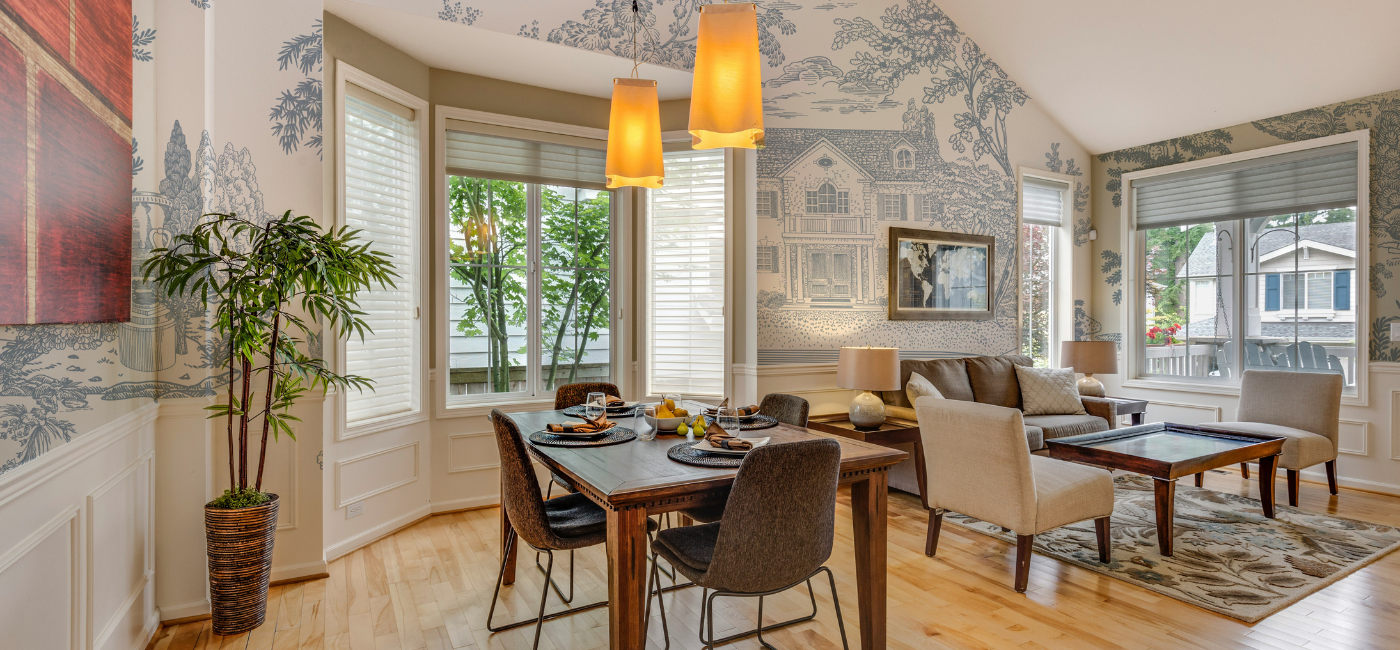
This approach works particularly well with delicate botanical repeats, textured wallpapers, scenic murals that wrap around corners, soft watercolour-inspired designs, and tonal patterns with gentle contrast all help create a seamless, spacious feel.
That said, a single feature wall works best with highly detailed or dramatic wallpaper, when highlighting a focal point such as a bed, fireplace, or dining area, or where windows and shelving would interrupt the pattern on the remaining walls.
Designer's Tip: Before choosing a feature wall, ask yourself whether it truly has a focal point. Without one, an accent wall can feel arbitrary rather than intentional.
5.Let Natural Light Guide Your Choice

Light changes wallpaper more than almost any other design element.
A pattern that feels bright and airy in a sunlit showroom can appear considerably darker in a north-facing bedroom. Likewise, wallpapers with subtle texture often reveal entirely different qualities throughout the day as natural light shifts, which is why one should always observe wallpaper samples in the room where they'll be installed throughout the day and alongside your existing furniture and flooring before making a final decision.
This simple step often prevents costly mistakes and ensures the wallpaper complements the room's unique lighting conditions.
In the end, a small room doesn't have to think small. Sometimes, the biggest transformation begins with the walls. A good design isn't measured in square footage—it's measured in how a space makes you feel.




%0ACan%20wallpaper%20actually%20make%20a%20small%20room%20look%20bigger?%0ASmall%20rooms%20have%20long%20been%20treated%20with%20caution%20in%20interior%20design.%20White%20walls,%20minimal%20decoration,%20and%20th...)